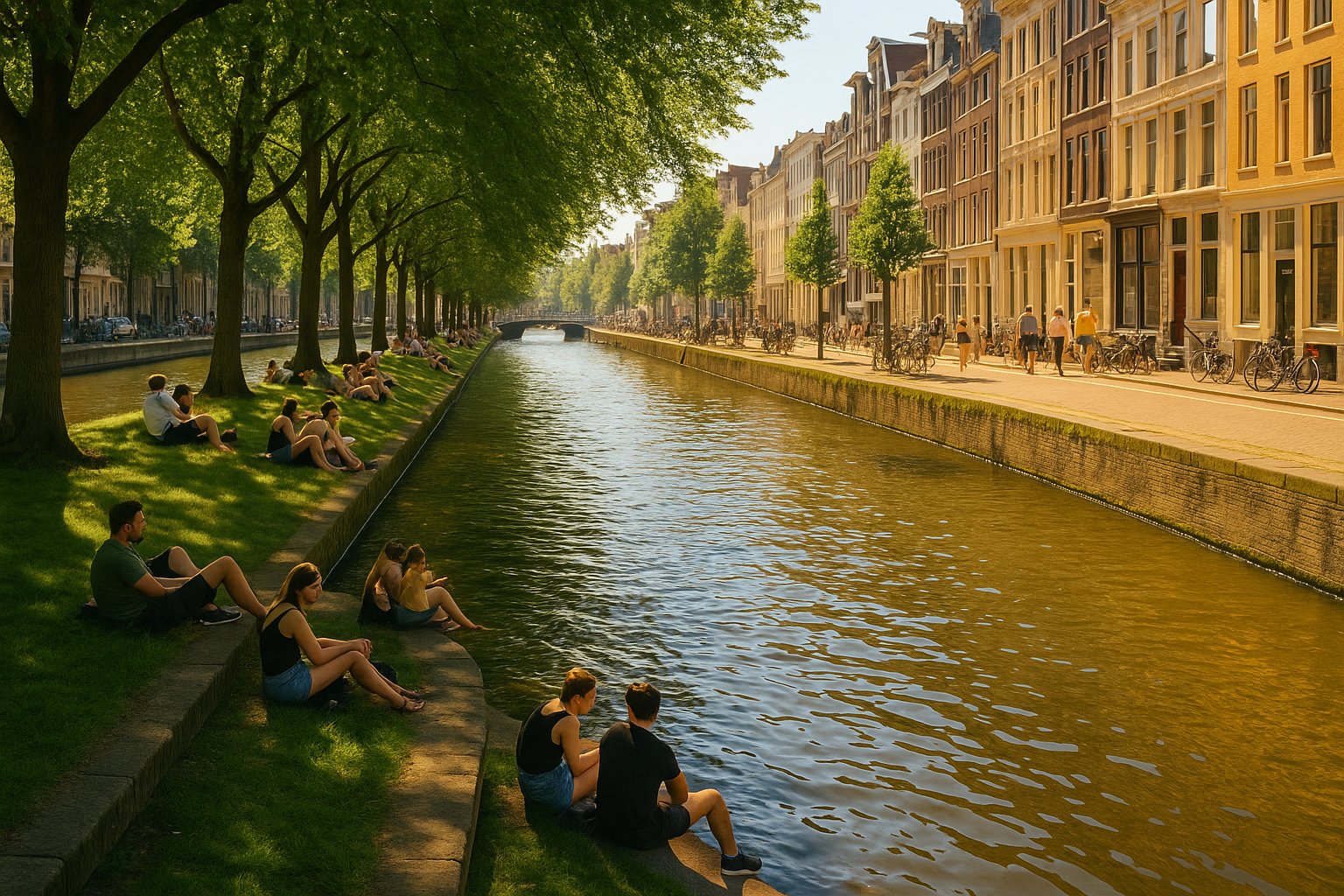
Urban heat waves are back in the headlines, and not just because Western Europe smashed its June-July temperature record this summer. This week, a new study from The University of Manchester reveals that urban canals can cool their immediate surroundings by more than 2°C during heat waves—a surprisingly powerful, low-tech climate adaptation hiding in plain sight. But how does this watery magic work, and what could it mean for the future of city design, public health, and your own STEM journey? Let’s dive in.
Urban Canals: Secret Weapons Against Extreme Heat
City dwellers know the struggle: sweltering streets, shimmering asphalt, and the infamous “urban heat island” effect that makes cities hotter than their leafy, rural neighbors. With climate change turbocharging summer heat waves worldwide (see: Europe’s record-breaking summer), finding ways to cool cities has never been more urgent.
Enter canals: those historic, often overlooked ribbons of water winding through cities. The Manchester study found that areas near urban canals were over 2°C cooler during heat waves compared to nearby non-waterfront spots. That’s a difference you can feel (and, for some, a difference between life and heatstroke).
The Science of Canal-Cooled Cities
Why are canals so effective at cooling their surroundings? Several intertwined scientific forces are at play:
- Evaporative Cooling: Water absorbs lots of heat as it evaporates, removing energy from the air and lowering local temperatures.
- Thermal Inertia: Water heats up (and cools down) more slowly than concrete, acting as a temperature buffer during heat spikes.
- Albedo & Shading: Water reflects some sunlight and, when lined with trees or buildings, can create microclimates of shade and comfort.
- Air Circulation: Canals often channel breezes, redistributing cooler air through urban canyons.
All these effects stack up to fight the stifling effects of urban heat. But with extreme weather on the rise, can this natural air conditioning be supercharged?
Turning Science Into Solutions: Research, Funding, and Urban Design
This canal-cooling discovery is more than a “fun fact.” It’s a legit research and innovation opportunity, especially for STEM students, early-career researchers, and anyone interested in climate adaptation, urban ecology, or public health.
Consider these project ideas:
- Analyzing how canal-side cooling varies with vegetation, canal width, or building density
- Designing low-cost interventions (like planting shade trees along canals)
- Comparing the cooling impact of canals to urban lakes, fountains, and green roofs
- Exploring the social equity of canal access during heat waves
- Developing city planning policies to maximize “blue-green” infrastructure
Ready to turn these ideas into reality (and maybe even snag some funding for your research)?
How Seamless Can Jumpstart Your Urban Heat Research
Whether you’re brainstorming a science fair project or prepping a grad-level research proposal, Seamless has tools to make your journey less sweaty:
- Scholarship Search: Find STEM scholarships that support research on climate, urban planning, and environmental innovation—with AI matching to save you hours of drudgery.
- Research Grants: Seamless AI helps you discover climate and public health grant opportunities, from local sustainability contests to international fellowships.
- Literature Review: Rapidly synthesize the latest research on urban heat islands, water infrastructure, and adaptation strategies (with gap analysis to spot what’s missing).
- AI Podcast Generator: Share your findings as an accessible, narrated podcast—because your research deserves more than a dusty PDF!
Quick Example: From Canal Curiosity to Climate Action
Let’s say you get inspired by Manchester’s study and want to do your own urban cooling project. Here’s how Seamless can help:
- Start with the Literature Review tool to scan recent studies and spot research gaps (e.g., “Are canal cooling effects the same in tropical cities?”).
- Hop over to the Research Grants tool to find funding to buy temperature sensors or partner with local environmental orgs.
- Package your results as a podcast using the AI Podcast Generator—and share with teachers, city councils, or your TikTok following.
So, Should Every City Build More Canals?
Not so fast! While canals are powerful coolers, they’re just one piece of the adaptation puzzle. They need maintenance, can be prone to pollution, and don’t work everywhere. But as cities retrofit for resilience, “blue infrastructure” (like canals and rivers) is joining “green infrastructure” (like parks and green roofs) in the climate toolbelt.
For students and researchers, this means a world of interdisciplinary opportunities—from hydrology to public policy to urban design. There’s never been a better time to bring fresh ideas (and funding proposals) to the table.
Ready to Make a Splash?
If this week’s canal-cooling breakthrough has sparked your inner climate innovator, don’t just sweat it out—take action! Dive into Seamless’s free Scholarship Search and Research Grants tools to find real opportunities, then turn your research into an AI-powered podcast that gets noticed. Whether you’re in high school, undergrad, or already deep into urban research, there’s funding, inspiration, and impact waiting for you.
Don’t let the next heat wave catch you off guard—start exploring, planning, and sharing your solutions today!