Original source: technode.com — SenseTime releases open-weight Loop-9B model that reuses layers for deeper computation
SenseTime has released the weights and code for its latest multimodal AI model, SenseNova Loop-9B, which introduces a novel approach to deepening computation by reusing layers. The model, announced on Tuesday, is designed to handle both text and images as input and produces text as output.
What happened
According to technode.com, SenseTime made the weights and code for SenseNova Loop-9B openly available this week. The model contains roughly nine billion parameters and is capable of processing both text and image inputs. It outputs text and is built to support tasks such as reasoning, coding, data analysis, and tool use.
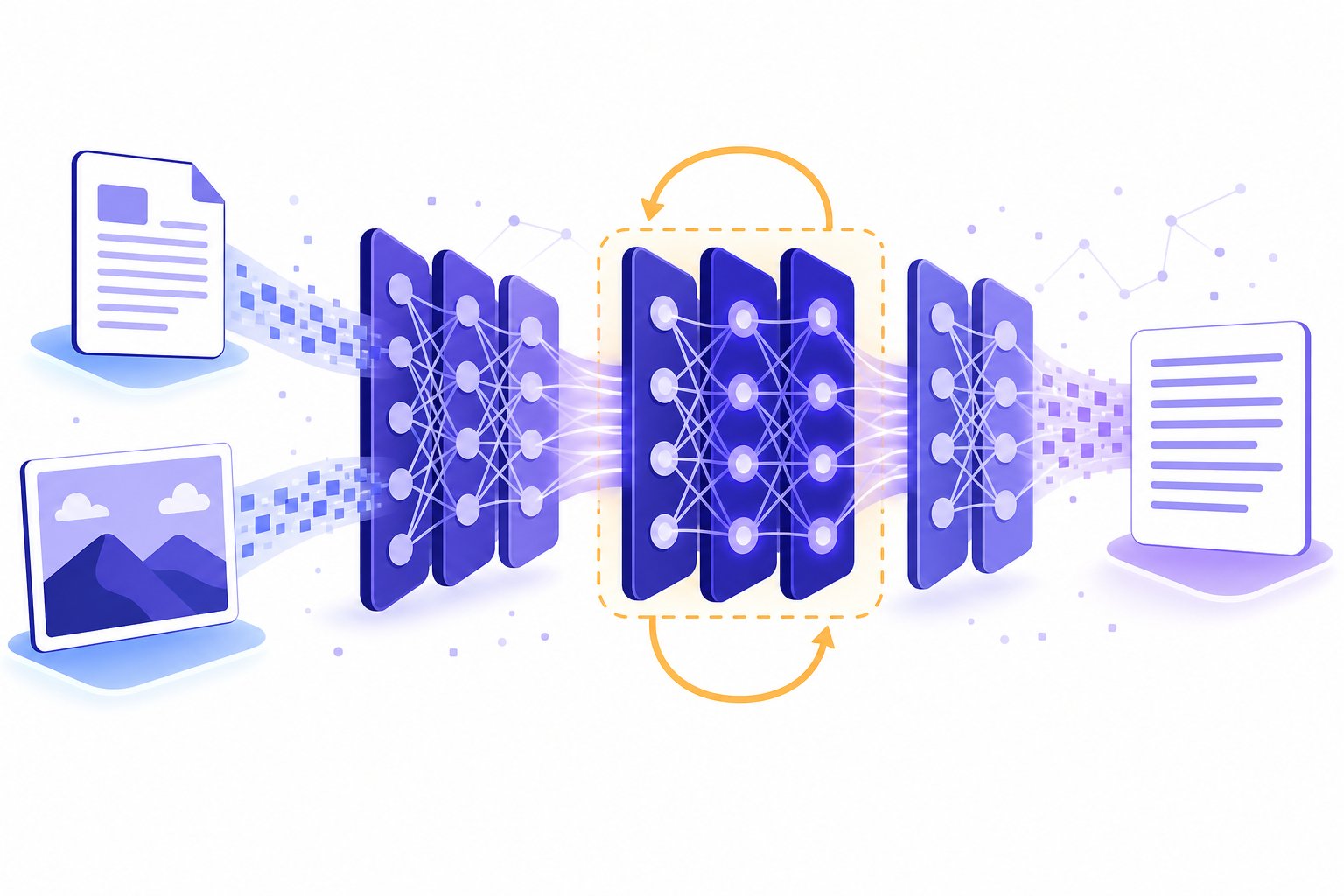
A key technical feature of Loop-9B is its approach to increasing computational depth. While the model has 32 decoder layers, it executes its shared middle layers twice during each forward pass. This results in the model performing the equivalent of 56 layers’ worth of computation per pass. According to SenseTime, this architecture enables the model to achieve competitive results with Qwen3.8-27B on selected agent and data-analysis benchmarks.
Loop-9B also offers a substantial context window, extending up to 512,000 tokens. This allows the model to handle much longer input sequences than many existing models. An officially released four-bit quantized version brings the model’s weights down to approximately 4.9 GB, making it more accessible for researchers with limited hardware resources. The documentation states that running the model with a 256,000-token context and an eight-bit key-value (KV) cache requires about 15 GiB of memory.
Why it matters for researchers
The release of Loop-9B with open weights and code is notable for researchers in AI and machine learning. The model’s technique of reusing layers to deepen computation offers a new architectural direction that could inspire further research on efficient, high-capacity models. The ability to process both text and images, combined with support for tasks like reasoning and data analysis, reflects ongoing trends in developing versatile, generalist AI systems.
The large context window of 512,000 tokens is significant for fields that require processing long documents or sequences, such as legal text analysis or code review. The availability of quantized versions and clear memory requirements lowers the barrier for experimentation and deployment, potentially supporting new research projects or applications within startups and industry labs. The reported competitive performance with larger models on some benchmarks also signals that efficient architectures remain a focus for both academic and commercial AI development.
Where to dig deeper
- Read the original report on technode.com for further details.
- Consult the official model documentation for technical specifications and usage instructions.
- Track new papers on machine learning with Seamless.
This article summarises public reporting. Facts as reported by technode.com; read the original for full details.