Original source: geekwire.com — Uncommon Thinkers: Andrew Redd’s audacious plan to turn ocean volcanoes into power plants
Seattle-based Endurance Energy has generated net electricity from an undersea geothermal prototype located 300 miles off the Oregon coast, according to geekwire.com. The achievement, though lasting only 8.7 seconds, marks the first time the startup’s system produced more energy than it consumed at a deep-sea volcanic site.
What happened
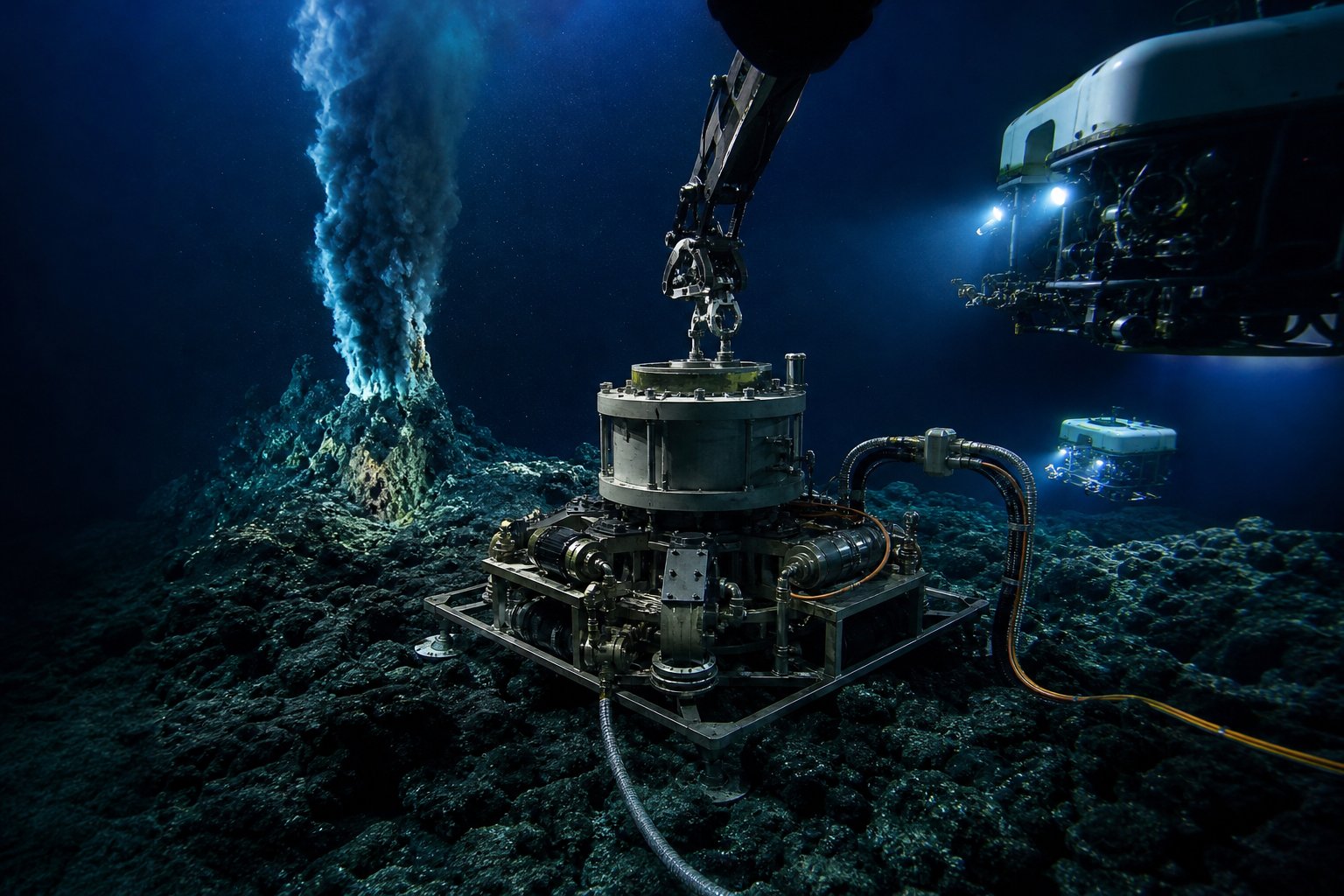
Endurance Energy was founded in January 2025 by Andrew Redd, a former SpaceX engineer, with the goal of turning ocean volcanoes into scalable power plants. The company’s fifth deep-sea deployment took place in September, where a 3-ton prototype power plant was landed on the seafloor near a natural hydrothermal vent. During this trial, the system generated net electricity for 8.7 seconds before technical issues, including a power-cable failure, ended the run. The team operated the system remotely from Seattle via a fiber-optic network provided by the National Science Foundation’s Regional Cabled Array, operated by the University of Washington.
Earlier, Endurance engineers drilled what they describe as the world’s first subsea geothermal well at a depth of about 5,000 feet. The well, 2 inches wide and 52 feet deep, delivered hydrothermal fluid, but the flow was too limited to operate the power plant. The team then switched to using a nearby natural vent for the successful test.
Endurance Energy has raised $63 million from investors, including the Seattle venture firm Ascend, and employs about three dozen people, with a dozen from SpaceX and others from Helion Energy and Blue Origin. The company is now developing a 2-megawatt generator, called Leopard, with plans to test it off the Oregon coast and deliver power to Tonga as its first commercial project next year.
Why it matters for researchers
This milestone demonstrates that deep-sea geothermal energy can be harnessed to produce net power, even if only briefly. For researchers in energy, batteries, and catalysis, the result highlights the technical and engineering challenges of operating in high-pressure, corrosive subsea environments. The need for robust materials, reliable remote operation, and efficient subsea power transmission are central hurdles. The story also reflects growing industry demand for renewable, scalable power sources that can meet the rising needs of AI-driven data centers and global electrification efforts. Endurance Energy’s progress signals opportunities for researchers and engineers to work on multidisciplinary teams, often in startup settings with significant private funding. The involvement of alumni from SpaceX, Helion Energy, and Blue Origin suggests that skills in aerospace, fusion, and energy systems are increasingly valued in the geothermal sector.
Where to dig deeper
- Full story on Endurance Energy’s deep-sea geothermal milestone at GeekWire
- Track new papers on batteries with Seamless
- Explore research on subsea geothermal systems and high-pressure energy materials in leading energy journals
This article summarises public reporting. Facts as reported by geekwire.com; read the original for full details.