Original source: canarymedia.com — Another novel nuclear project gets green light to start construction
The U.S. Nuclear Regulatory Commission (NRC) has approved a joint application by X-energy and Dow Chemical to construct four Xe-100 advanced nuclear reactors at Dow’s industrial site in Texas, according to canarymedia.com. This marks the first NRC construction permit for a high-temperature gas reactor (HTGR) in nearly 60 years.
What happened
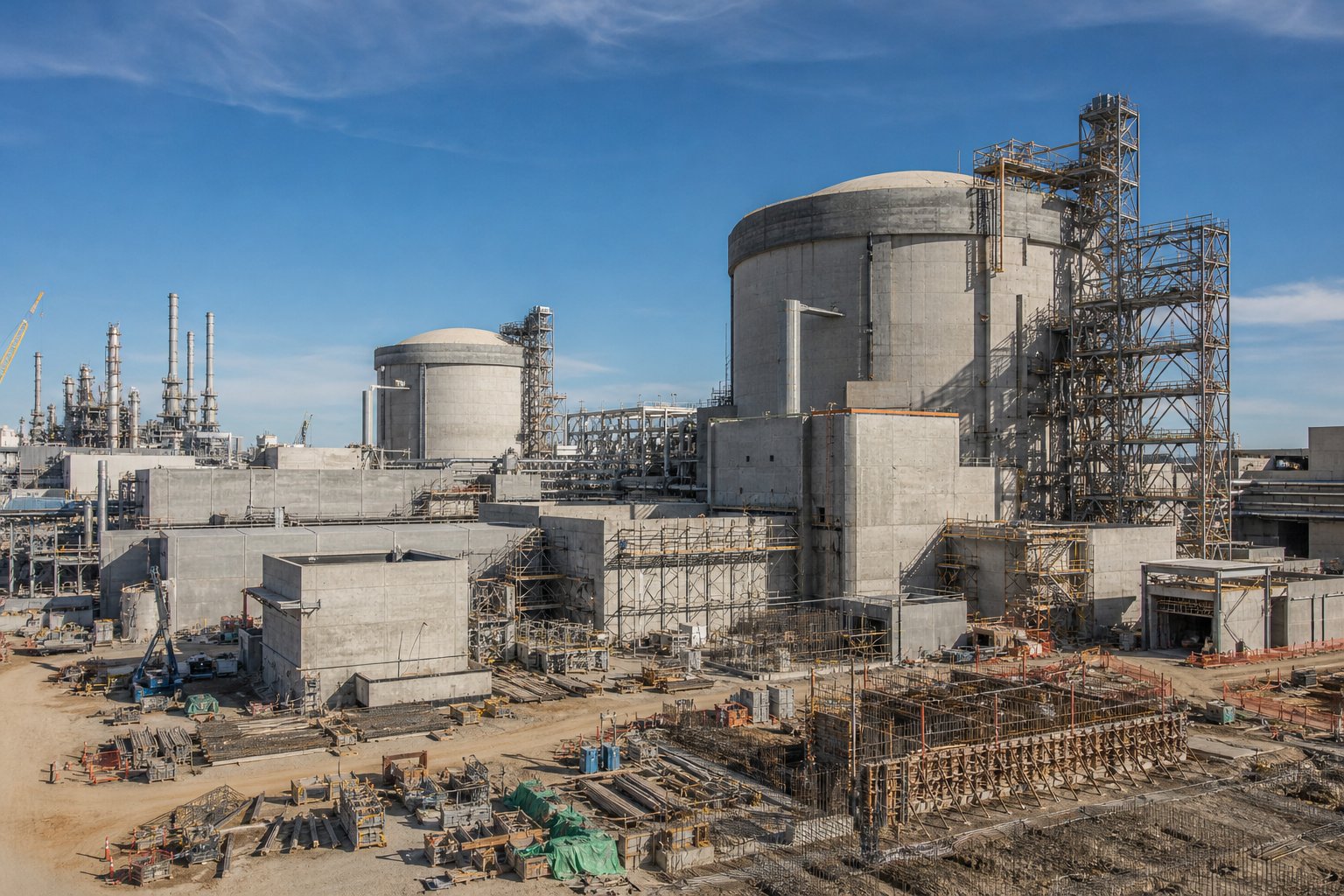
On Monday, the NRC cleared X-energy and Dow Chemical to start building four Xe-100 reactors at Dow’s UCC Seadrift Operations facility. The reactors will generate electricity and high-temperature steam for plastics and petroleum derivative production, replacing aging fossil-fueled equipment. The site, called Long Mott Generating Station, does not yet have an operating license, and construction is not expected to finish until at least July 1, 2033, according to the NRC permit.
The NRC completed its review in less than 18 months, a record pace for contested hearings. This approval is part of a broader federal push to accelerate nuclear energy projects, with consistent U.S. Department of Energy (DOE) support across recent administrations. Both X-energy and TerraPower are set to receive at least $2 billion each through the DOE’s Advanced Reactor Demonstration Program, according to canarymedia.com.
The Xe-100 reactors use helium as a coolant, allowing for safer operation at higher temperatures than traditional water-cooled reactors. Each unit is designed to produce up to 80 megawatts of electricity and 200 MW of thermal energy. If completed, Seadrift could become the first U.S. industrial site powered and heated directly by nuclear fission.
The NRC has also recently approved other advanced reactor projects, including three molten-salt-cooled reactors by Kairos Power in Tennessee and a liquid-sodium-cooled reactor by TerraPower in Wyoming.
X-energy says it has secured a federal commitment for the high-assay, low-enriched uranium (HALEU) fuel needed for Long Mott and a commercial agreement for enough to support future reactors. The company’s Tennessee facility to fabricate HALEU fuel pellets is expected to open in early 2028. Dow has yet to make a final investment decision on the project and is not expected to do so before 2028.
Why it matters for researchers
The NRC’s approval of the Xe-100 project signals growing momentum for advanced nuclear technologies in the U.S. energy and industrial sectors. High-temperature gas reactors (HTGRs) like the Xe-100 can supply both electricity and process heat, a combination valuable for chemical manufacturing and catalysis. For researchers, this means increasing demand for expertise in nuclear materials, catalysis under extreme conditions, and fuel cycle innovation.
The project’s progress also reflects a shift toward public and private investment in next-generation reactors, with significant federal funding and streamlined regulation. This environment may offer new opportunities for startups, fuel development, and industrial partnerships, especially as the U.S. aims to quadruple its commercial nuclear capacity by 2050. The return of HTGRs to the U.S. after decades suggests a renewed role for nuclear energy in decarbonizing heavy industry.
Where to dig deeper
- Read the original report at canarymedia.com
- Track new papers on advanced reactors and catalysis with Seamless
- Review DOE funding and regulatory reform updates for nuclear innovation
This article summarises public reporting. Facts as reported by canarymedia.com; read the original for full details.