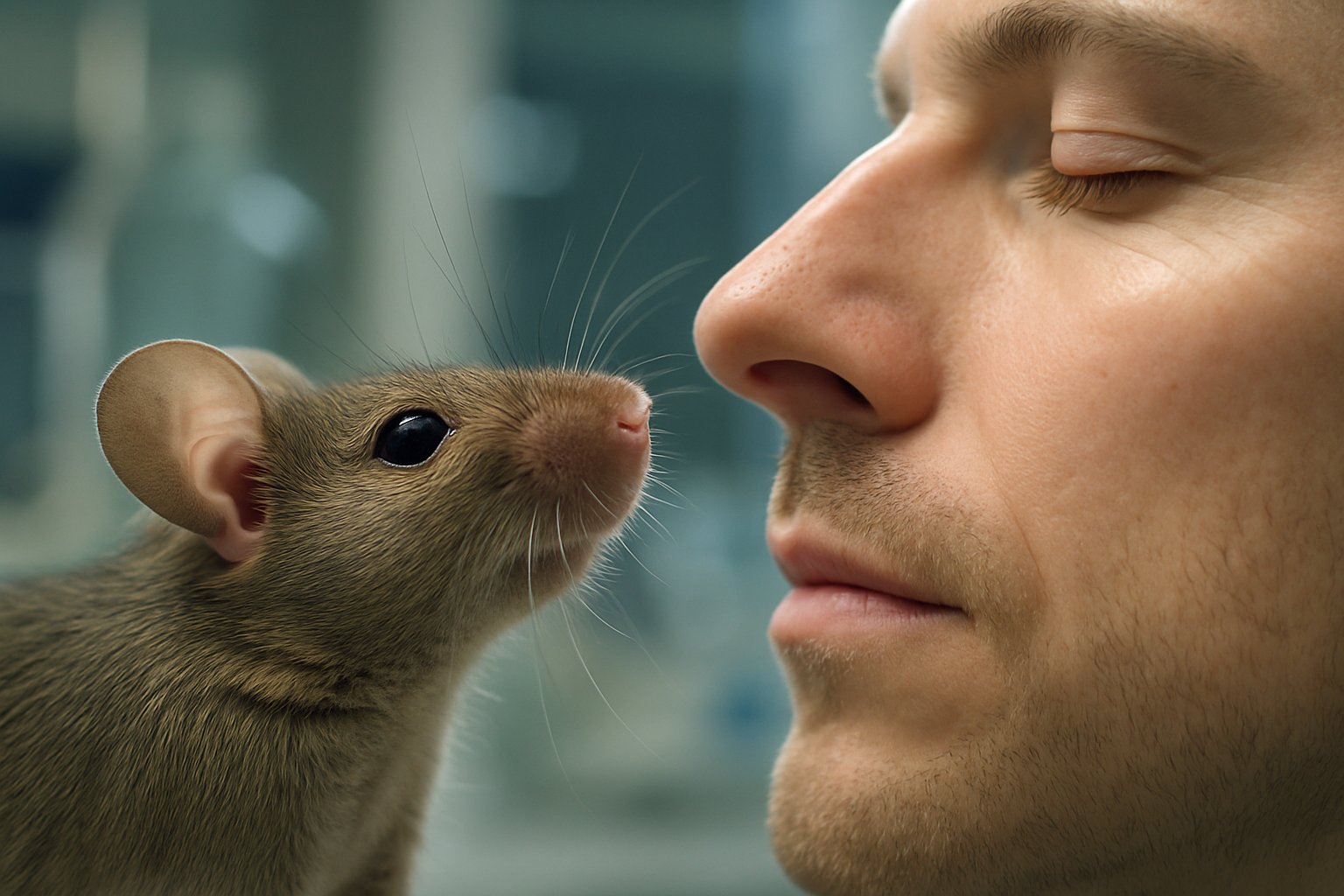
Ever wondered why the whiff of fresh popcorn or a musty old book can whisk you back in time? Or why your dog seems to know there’s a sandwich in your bag before you do? According to brand-new research published this week, the secret sauce behind mammals’ super-sniffer abilities is an ancient, evolutionarily preserved system for processing smells. From tiny, twitchy-nosed mice to us deep-inhaling humans, we all rely on the same neural blueprint to make sense of the scents around us. Let’s take a (deep) breath and explore how this discovery is shaking up our understanding of biology, neuroscience, and even AI—and how you can get funding to sniff out the next big breakthrough.
The Science of Smelling: One Blueprint, Many Mammals
Imagine a mouse taking rapid-fire sniffs, scanning for crumbs. Now picture a human, pausing for a luxurious inhale over a cup of coffee. At first glance, our sniffing styles couldn’t be more different. But under the hood—specifically, in the brain’s olfactory system—both species, and indeed all mammals, use a remarkably similar neural network to decode airborne chemical messages.
The recent study, conducted by researchers at Harvard Medical School and the Max Planck Institute (and reported by Phys.org), used advanced imaging to follow the real-time flow of scent signals from the nose through various brain centers. They found that patterns of neural activation, the ‘code’ used to process different odors, are astonishingly conserved—even after millions of years of evolutionary divergence. In other words: Whether you’re a bat, a beagle, or a biochemist, your sense of smell is working off a playbook your ancestors wrote before the dinosaurs died out.
Why Does an Ancient Smell System Matter?
This discovery isn’t just trivia for Trivial Pursuit. Here’s why it’s a big deal:
- It reveals how evolution shapes complex behavior across species—bridging biology, psychology, and neuroscience.
- It’s a goldmine for developing AI that can ‘smell’ (electronic noses, bio-inspired sensors, even smell-based search algorithms).
- It provides a foundation for understanding smell-related disorders (like anosmia or even neurodegenerative diseases!) and for developing treatments or diagnostics.
- It opens up questions about learning, memory, and how sensory experience shapes our perception of the world.
Whether you dream of decoding animal communication, building better olfactometers, or just want to know why cheese smells so…cheesy, this research lays critical groundwork.
From Lab Bench to Grant Bench: Funding Your Next Smell Science Project
If the olfactory system’s evolutionary story has your brain abuzz with research ideas, you’re in luck—there’s never been a better time to dive into the science of smell. But let’s face it: funding can be as elusive as the source of a mysterious odor in the student lounge.
That’s where Seamless’s Scholarship Search and Research Grants tools come in. Whether you’re a high school student inspired by animal behavior, an undergraduate mapping brain circuits, or a grad student launching your first project, our AI-powered tools match you to scholarships and grants in STEM fields—including neuroscience, biology, psychology, and bioengineering. The best part? No more endless Google rabbit holes or chasing expired deadlines; just targeted, up-to-date opportunities.
Pro Tip: Review Before You Apply
Got a big idea for a research project or scholarship essay on olfactory evolution? Don’t go nose-blind to the mountain of literature already out there! The Literature Review tool from Seamless lets you generate custom, AI-powered reviews on any STEM topic—including olfaction, animal behavior, and evolutionary neuroscience. Instantly scan the landscape, spot research gaps, and strengthen your proposal or essay. Your future reviewers will thank you (and so will your GPA).
Smelling Success: From Research to Impact
Why stop at the printed page? Modern science is all about communicating research beyond journal PDFs. Imagine turning your literature review on the evolution of smell into a podcast or lip-synced video, so your findings can reach classmates, the public, or even potential collaborators around the world. The AI Podcast Generator and Video Podcast tools can help you do just that—no fancy studio required. It’s storytelling for the 21st-century scientist (and it looks great on fellowship or grant applications).
What’s Next for the Science of Smell?
This evolutionary ‘blueprint’ for olfaction is just the beginning. Researchers are now asking how this system adapts to new environments, processes complex scent mixtures (hello, perfume industry!), and interacts with memory and emotion. AI and machine learning are poised to supercharge the field—so if you’re passionate about neuroscience or sensory biology, you’re in the right place at the right time.
Ready to Start? Your Path to Funding, Research—and the Future of Smell Science
Whether you’re hunting for a scholarship, scouting grant opportunities, or digging into a literature review on olfactory neuroscience, Seamless is here to help you take the next step. The science of smell is evolving—are you ready to make your mark? Start your search, fuel your curiosity, and let your next research journey begin!