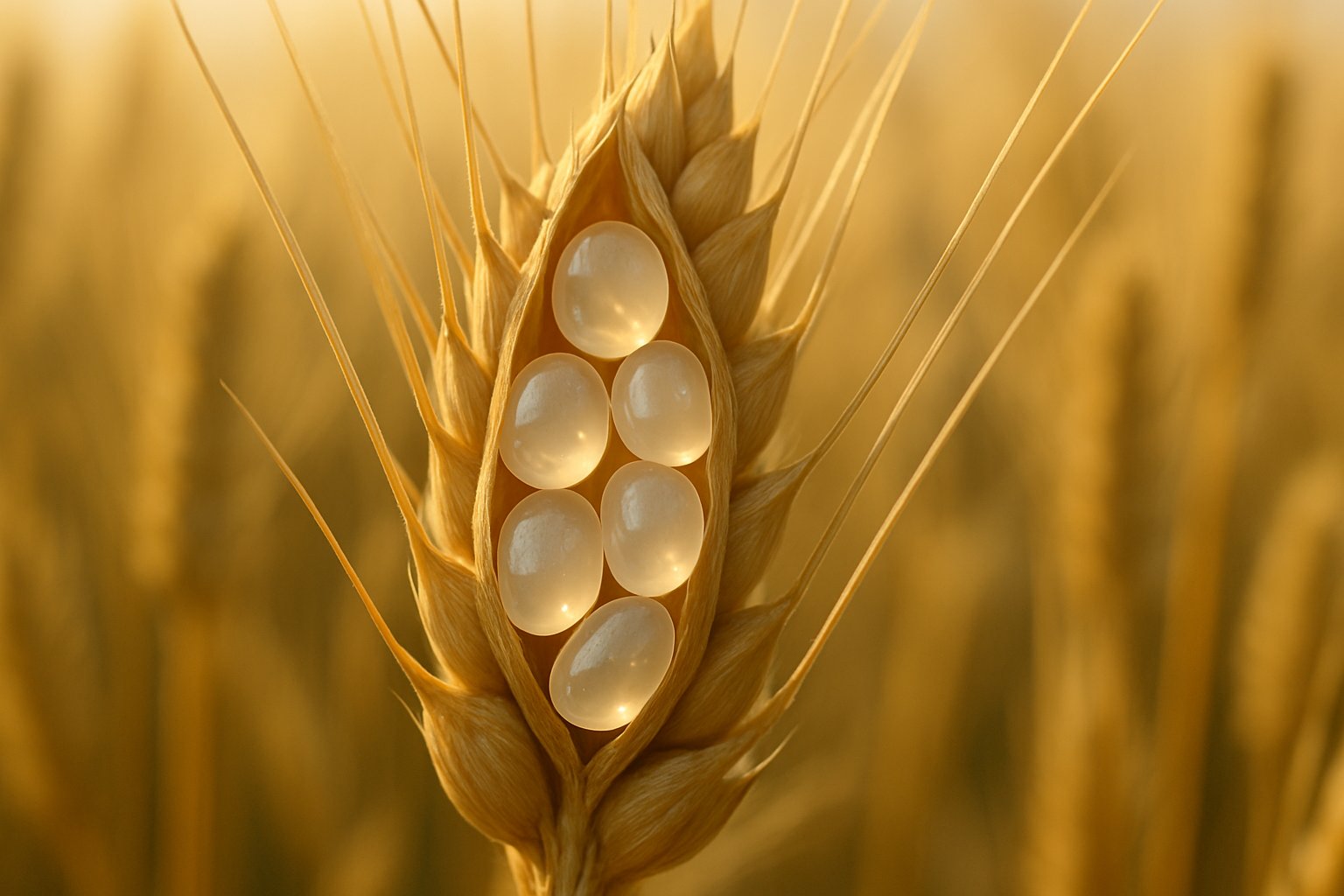
Ready for a twist in your daily bread? Giant wheat starch granules—freshly engineered by scientists—are set to shake up food, nutrition, and biomanufacturing. The latest headline-worthy breakthrough could change the carbs on your plate and the plastics in your lab. But what are these giant granules, how did we get them, and why should STEM students care? Let’s dig in (with a side of science, naturally)!
What Are Giant Wheat Starch Granules?
Let’s start with the basics: starch granules are tiny, energy-storing structures inside wheat seeds. They’re what make bread fluffy, noodles chewy, and even glue sticky. Traditional wheat has two types: small and large granules, with the large ones topping out at roughly 35 micrometers. But thanks to some clever biological engineering, a team of researchers has pushed the boundaries—growing wheat with granules up to three times larger than usual.
Think of it as supersizing your starch, but with scientific precision. These bigger granules could boost the efficiency of everything from pasta making to biodegradable plastic production.
Why Does Supersized Starch Matter?
On the surface, bigger starch granules might seem like a tiny tweak. But the implications are massive—and not just for foodies or farmers. Here’s why it’s a big deal:
- Nutrition: The altered structure could slow down digestion, creating foods with a lower glycemic index (read: friendlier for blood sugar control).
- Manufacturing: Giant starch granules are easier to separate and process, making industrial uses (think biodegradable plastics, adhesives, and coatings) more cost-effective and sustainable.
- Global food security: Higher-yield, more versatile crops mean we can feed more people, in more diverse ways.
- Research potential: This opens new doors for plant genetics, crop science, and even synthetic biology. Hello, cross-disciplinary research projects!
It’s not just about fancier bread—this is the convergence of agriculture, biotech, and green industry, all in one kernel.
How Did Scientists Engineer Giant Granules?
The team behind this breakthrough, as reported by Phys.org, used advanced gene-editing techniques to tweak the expression of genes involved in starch biosynthesis. By modulating specific “starch synthase” genes, they boosted the size of granules without compromising plant health or yield.
It’s a stellar example of functional genomics: using knowledge of plant genetics to dial up desirable traits, with real-world impacts for both food technology and material science.
A Real-World Challenge for STEM Students
All this talk of bioengineering isn’t just for the lab coats in fancy greenhouses. If you’re a high school or university STEM student, this is your cue: everything from the biochemical analysis of starch to the economics of sustainable plastics needs fresh minds like yours.
- Want to join research that pushes the boundaries of plant science? Start hunting for STEM scholarships or research grants that support food technology or genetic engineering projects.
- Curious about how this discovery fits into the bigger picture? Use Seamless’s AI literature review tool to survey the latest on starch synthesis, bioengineering, and the future of functional foods. It’s the shortcut to finding research gaps (and maybe even your next thesis topic).
- Ready to turn your findings into something your classmates, teachers, or competition judges will remember? Try generating a podcast or video explainer with the AI Podcast Generator or Video Podcast tools. It’s public engagement made easy, in any language you need.
Research and Funding Opportunities: Start Here
Bioengineering breakthroughs like this don’t just happen in isolation—they need passionate, well-funded teams. If you’re inspired to work at the intersection of plant genetics, food science, or green manufacturing, Seamless has you covered.
- Scholarship Search: Find the latest funding for undergrad, postgrad, or postdoc work in plant biology, genetic engineering, or food innovation.
- Research Grants: Discover global and niche grant opportunities for biology, chemistry, and sustainable tech research.
- Application Helper: Keep track of every deadline and requirement for your dream program or grant—no more missed opportunities.
And if you’re prepping a scholarship or grant application about bioengineered wheat? Seamless’s Essay Helper can help you craft the perfect, personalized pitch (minus the carb overload).
From Lab Bench to Breakfast Bench—What’s Next?
Supersized wheat starch granules are just the start. As we learn to fine-tune crop properties using precision genetics, future foods could be healthier, more sustainable, and even custom-made for different cultures or climates. The same science might power next-gen bioplastics, edible packaging, or climate-smart agriculture.
For STEM students and researchers, the opportunities are as big as, well, these new starch granules. Whether you’re interested in the nuts and bolts of gene editing or the business of food innovation, this discovery is your invitation to roll up your sleeves and get involved.
Ready to explore, research, or fund your own sustainable food project? Get matched to STEM scholarships, discover grant opportunities, and build your own research journey with Seamless. The future of food—and science—is waiting. Don’t let it go stale.