Original source: sciencedaily.com — MIT scientists turn immune cells into cancer killers inside the body
MIT scientists have developed nanoparticles that can reprogram immune cells directly inside the body, enabling them to attack cancer and harmful immune cells. In mouse experiments, this approach eliminated tumors and reversed liver damage, according to sciencedaily.com.
What happened
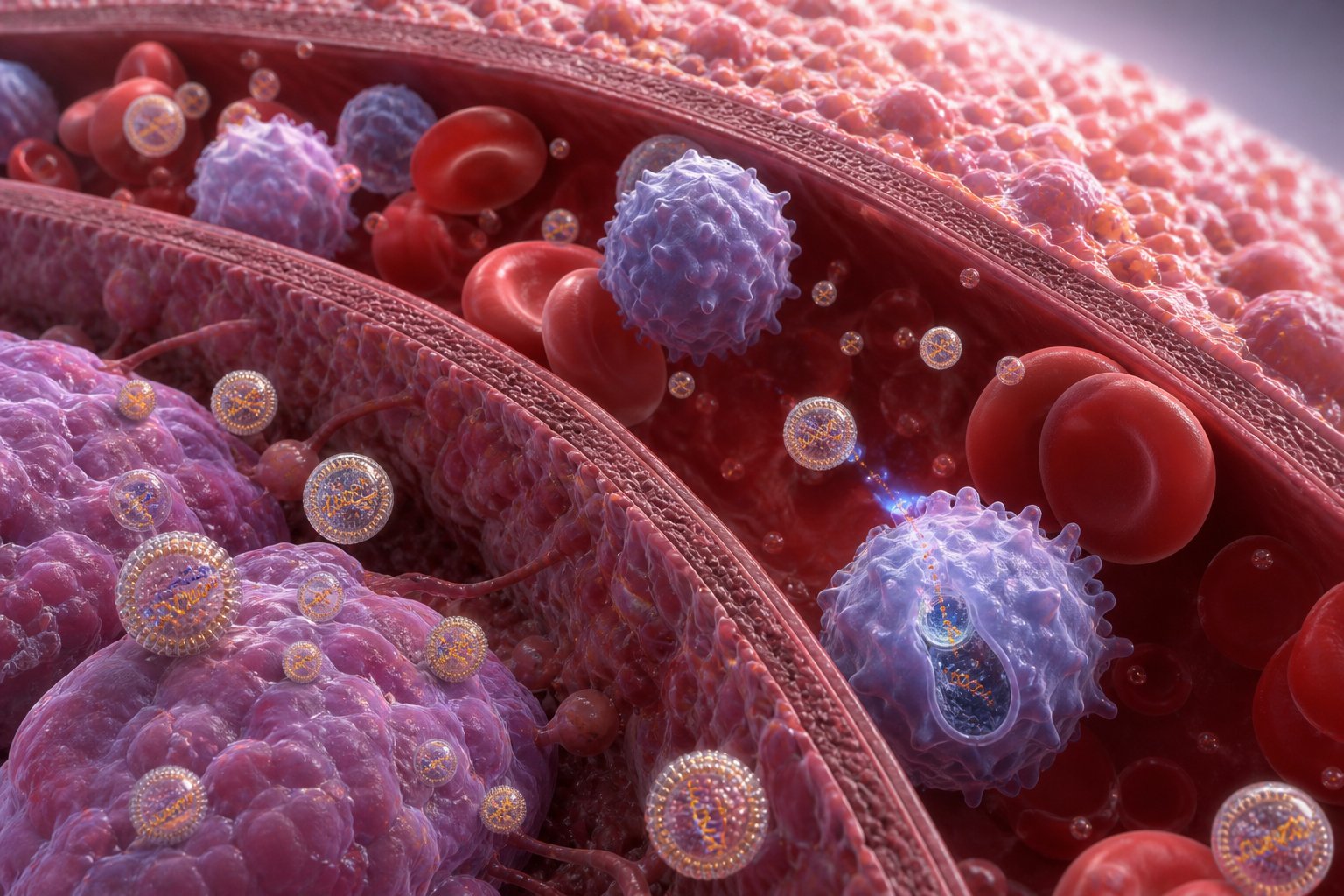
A team at MIT created a new technique that modifies natural killer (NK) cells—an immune cell type—inside living organisms. Unlike current cell therapies that require removing a patient’s cells, modifying them in a lab, and returning them, this method uses lipid nanoparticles to deliver messenger RNA (mRNA) instructions straight to NK cells in the body. These instructions prompt the NK cells to produce specialized proteins, allowing them to identify and destroy diseased T cells, including cancerous ones and those involved in autoimmune diseases.
The researchers, led by Professor Daniel Anderson, tested the nanoparticles in mice. They found that about 80 percent of targeted NK cells were successfully modified after injection. In mouse models of aggressive melanoma, three out of five treated animals experienced complete tumor remission. In a humanized mouse model of T cell lymphoma, five injections of the nanoparticles led to the complete elimination of tumors. The results matched those of traditional approaches where NK cells are engineered outside the body and then returned.
The technique also showed promise for autoimmune diseases. In mice with autoimmune hepatitis, nanoparticle-modified NK cells eliminated harmful T cells attacking the liver. The animals’ liver tissue healed after just one injection, demonstrating the approach’s potential beyond cancer treatment.
The study was led by MIT postdoctoral researcher Yuang Chen and graduate students Julia Monkovic and Haseeb Mughal, with contributions from Professor Robert Langer. The findings were published in Nature Biotechnology.
Why it matters for researchers
This discovery could dramatically simplify immune cell therapy manufacturing. Current therapies, such as chimeric antigen receptor (CAR) T cell treatments, require complex, expensive, and time-consuming processes. By engineering immune cells directly inside the body, the new approach could reduce costs and increase access to advanced therapies for cancer and autoimmune diseases. The study demonstrates that in vivo reprogramming of NK cells can match the effectiveness of traditional ex vivo methods in mouse models.
For researchers and clinicians, this signals a shift toward more scalable and potentially off-the-shelf immunotherapies. The platform’s adaptability—by changing the mRNA instructions, it can target different disease markers—could open new avenues for treating a range of cancers and autoimmune conditions. While the findings are still preclinical and require further validation in humans, the approach highlights the increasing demand for interdisciplinary expertise in nanomedicine, immunology, and genetic engineering. This may influence both academic research funding and industry interest in streamlined cell therapy solutions.
Where to dig deeper
- Read the full summary at sciencedaily.com: https://www.sciencedaily.com/releases/2026/11/261104084015.htm
- Track new papers on cancer therapy with Seamless
- Follow developments in in vivo immune cell engineering and nanoparticle delivery systems in leading journals.
This article summarises public reporting. Facts as reported by sciencedaily.com; read the original for full details.