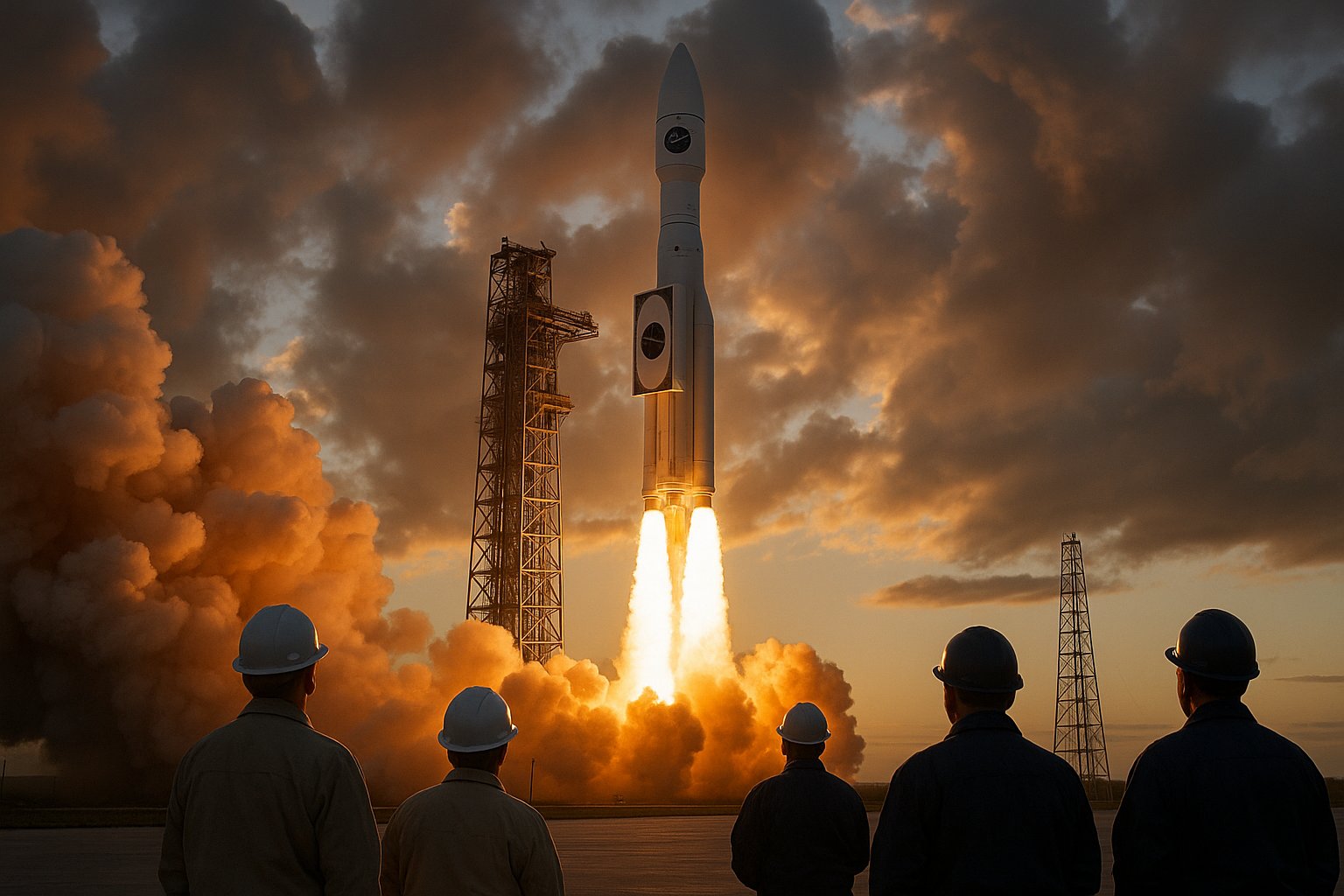
Roman Space Telescope Launch: The phrase alone sounds like the title of the next big-budget sci-fi epic. But this week, it’s real headline news: NASA’s Nancy Grace Roman Space Telescope has officially blasted off, embarking on a million-mile journey to L2, the prime cosmic perch for peeking into the universe’s deepest mysteries (source).
With its eyes set on dark energy, exoplanets, and the hidden architecture of the cosmos, Roman’s launch isn’t just thrilling for astronomers. It’s an open invitation to STEM students, early-career researchers, and cosmic daydreamers. Whether you’re itching to join the next generation of space explorers or just want to snag a stellar scholarship, this moment is your launchpad, too.
Why the Roman Space Telescope Launch is a Big Deal
Let’s break down the buzz. The Roman Space Telescope is NASA’s newest flagship mission—think “Hubble, but with a wide-angle lens and a dark energy obsession.” Roman is designed to scan immense swaths of the sky, mapping galaxies, searching for rogue exoplanets, and unraveling the secrets behind the universe’s accelerating expansion (ScienceDaily).
Here’s what’s on Roman’s cosmic to-do list:
- Map billions of galaxies to trace the growth of cosmic structure
- Hunt for exoplanets using gravitational microlensing (think: real-life space detective work)
- Probe the true nature of dark energy (that mysterious force making the universe sprint apart)
- Create datasets so massive and rich that future STEM discoveries are almost guaranteed
For students and researchers, the launch marks the beginning of a new era of accessible, open astronomical data. But how do you get from “That’s cool!” to “I’m working on Roman data for my thesis”? Let’s plot your trajectory.
How You Can Join the Cosmic Adventure
Space science isn’t just for the folks with NASA badges. The Roman mission is set to release a torrent of data—galaxy surveys, exoplanetary catalogs, and more—perfect for undergraduate projects, literature reviews, or that ambitious grad school application. Here’s how to get involved (no rocket required):
1. Find Space Science Scholarships and Research Grants
First things first: You’ll need fuel for your academic journey. The Seamless Scholarship Search tool can match you with space- and STEM-focused scholarships worldwide—think NASA internships, astrophysics fellowships, and awards for underrepresented minorities in science. Already dreaming up a research project? The Research Grants tool uncovers funding for everything from undergraduate summer projects to early-career research on Roman-derived data.
2. Review the Roman Literature—Faster Than Light
Maybe you’re eyeing a Roman-related essay, or you want to see where your cosmic curiosity fits into the existing knowledge nebula. With the AI Literature Review tool, you can instantly scan the galaxy of published research—Roman, Hubble, JWST, and beyond—for gaps, trends, and open questions. That means smarter research proposals, sharper essays, and fewer sleepless nights wading through paywalled PDFs.
3. Share Your Cosmic Curiosity: Podcast and Video Magic
Don’t just read about Roman—share what you learn! Seamless’ AI Podcast Generator can transform your literature review (or even that astronomy club project) into a narrated podcast, in dozens of languages. Want to go visual? The Video Podcast tool creates lip-synced AI presenters, perfect for science communication competitions or YouTube channels.
Roman’s Big Questions: What Will We Discover?
“What is dark energy?” might sound like philosophical poetry, but it’s a central puzzle of 21st-century physics. Dark energy makes up about 70% of the universe, yet we have only the foggiest idea what it actually is (and, no, it’s not just what happens after the third espresso shot).
Roman’s unprecedented resolution and sky coverage will enable:
- Testing cosmological models and exploring whether Einstein’s equations need a cosmic tune-up
- Detecting free-floating, “orphaned” exoplanets—the interstellar loners of our galaxy
- Fueling data science and AI research, from new algorithms for image analysis to citizen science projects
If you’ve got programming skills (or want to develop some), consider learning Julia, Python, or R to analyze Roman’s datasets. Tip: Julia just hit the news as the programming language powering much of today’s research computing.
How Seamless Boosts Your Cosmic Ambitions
With so much data, funding, and career potential tied to missions like Roman, the only real barrier is knowing where to start. That’s where Seamless shines:
- Find Your Funding Orbit: Match with the best space science and astrophysics scholarships and grants in seconds using Scholarship Search and Research Grants.
- Write Stellar Applications: Crush those essays and deadlines with Essay Helper and Application Helper.
- Do (and Share) Real Science: Review literature, identify knowledge gaps, and turn your work into podcasts or videos—no spaceship needed.
Ready for lift-off? Seamless puts the universe (and the scholarship database) at your fingertips. Start your search today, and you could be the next name in Roman’s growing list of cosmic explorers!
As Roman begins its journey, so can you. Whether it’s finding funding, reviewing the literature, or sharing your insights with the world, your path to the stars is more open—and more seamless—than ever before.