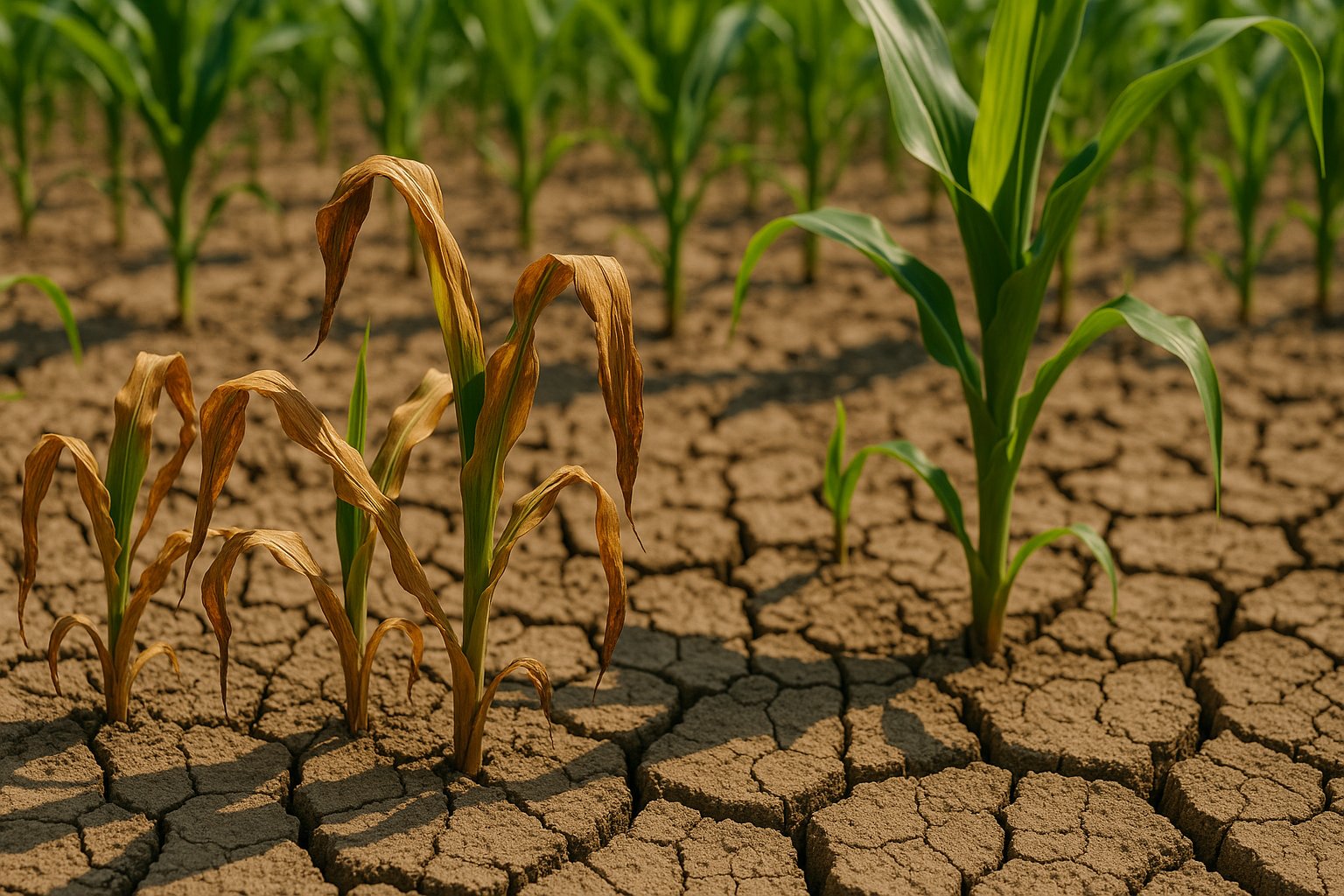
Early drought stress in corn is more than just a rough patch for plants—it’s a warning sign for agriculture, food security, and climate resilience. This week, a new study [Phys.org: Early heat and drought stress can have lasting effects on corn growth] reveals that even a brief spell of heat and dryness at the seedling stage can stunt a corn plant’s growth and delay flowering for months. For STEM students, researchers, and future food scientists, this is a prime example of how one experiment in a greenhouse can ripple through global food systems—and your own research trajectory.
Early Stress, Lasting Impact: The Science Behind Stunted Corn
Why does a single hot, dry week in April matter when you’re harvesting in September? The new research out of the Donald Danforth Plant Science Center used controlled greenhouse experiments to show that early-life heat and drought don’t just set back a young plant—they change its biology, affecting growth, root structure, and the timing of flowering even months after conditions return to normal.
For corn, one of the world’s most important crops, this matters. Researchers found that drought and heat at the three-leaf stage (when baby corn plants are smaller than your forearm) led to significantly reduced biomass and delayed tasseling. The effect? Lower yields, more unpredictable harvests, and fresh urgency for climate-smart agriculture.
Why Should Students and Early-Career Scientists Care?
Studying plant stress isn’t just for specialists in crop science. It’s a goldmine of questions for anyone in biology, environmental science, data analytics, or AI. Understanding how early stress translates to long-term impacts connects physiology, genetics, climate modeling, and even economics. And with agriculture facing more weather extremes, there’s never been a better time to get involved.
Not sure where to start? Here’s what you can do:
- Scan current STEM scholarships for plant science, agriculture, or climate research topics
- Use AI-powered literature reviews to find the hottest questions and research gaps in drought stress
- Apply for research grants that support innovative studies in sustainable agriculture
Drought Research: Where the Gaps (and Opportunities) Are
Want to make your mark in agricultural science? Start with the literature. Seamless’s AI Literature Review tool can help you:
- Summarize the latest findings on plant stress, from root signaling to gene expression
- Spot patterns—like how different corn varieties respond to early drought, or which environmental factors matter most
- Identify what’s still unknown (hello, research gap!) so you can craft a proposal that stands out
Combine this with data from the latest studies—like the recent Danforth Center work—and you’ll be primed to ask and answer meaningful questions. For example: Can selective breeding or gene editing create corn varieties that bounce back faster from early stress? How do soil microbes help (or hurt) recovery?
Funding Your Future in Climate-Smart Agriculture
Let’s face it: ambitious research takes more than curiosity. It takes funding, mentors, and the occasional (OK, frequent) cup of coffee. That’s where Seamless’s Scholarship Search and Research Grants tools come in. Whether you’re an undergrad looking for a summer internship, a grad student prepping a thesis, or a young researcher eyeing your first independent project, these AI-powered searches surface:
- Funding opportunities tailored to your interests and academic status
- Application deadlines and requirement checklists via Application Helper
- Hidden gems—think travel funds for conferences, fieldwork stipends, or interdisciplinary fellowships
With climate resilience research on the rise, there’s growing support for students tackling food security, sustainable ag, and climate adaptation.
Turning Research Into Real-World Impact
Publishing a research paper is great. Making your findings accessible to farmers, policymakers, and even your non-scientist friends? That’s next-level impact. Seamless lets you turn your literature review into an AI-narrated podcast or video podcast in multiple languages—ideal for reaching broader audiences, sharing with ag educators, or even submitting with your grant application.
Why not take your next research presentation global? Translate your findings, narrate them with AI, and help farmers or fellow students from around the world hear what you’ve learned about drought, crops, and climate.
Ready to Grow Your Research?
Whether you’re inspired by the latest discoveries on early stress in corn or want to pioneer new solutions for a changing climate, Seamless has your back. Start by finding scholarships, reviewing the literature, or identifying research grants. Who knows? Your next application (or podcast) might help cultivate the future of global food security.
Curious about the science? Dive deeper into the original study at Phys.org.